
Songs of Mourning, Songs of Faith and Joy
On Friday 31st May 2024, tenor James Gilchrist and guitarist Mark Eden performed Ailsa's Songs of Faith and Joy in St Paul's church in Winchester. They were programmed together with lute songs by Dowland, and Coprario's Songs of Mourning (written for the death of Prince Henry, son of James 1 in 1612), which inspired their composition. This was the first performance of Ailsa's song cycle for five years, sung by one of Britain's finest tenors in the opening concert of the Winchester Guitar Festival.

A musical celebration in Durham
On March 6th 2024, in the run-up to International Women's Day, there was a concert of Ailsa's music at St Mary's College, Durham University, where she studied music in the 1950s. Students from the Music Department presented a programme of songs, choral, piano and chamber music, in the most wide-ranging performance of Ailsa's works to date. Her daughter Josie Dixon introduced the concert with an account of Ailsa's musical life and the formative influence of her time in Durham.
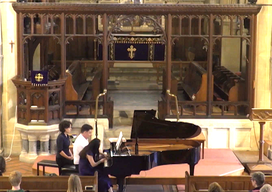
Wessex Concerts filming project
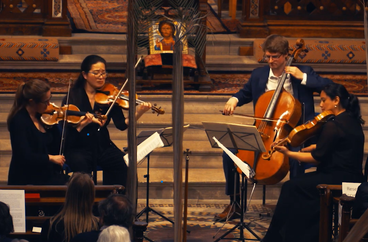
The latest releases on Ailsa Dixon’s YouTube channel are a pair of live recordings from concerts in 2022, featuring her sonata for piano duet Airs of the Seasons and the first complete concert performance of Variations on Love Divine for string quartet.
This project was a collaboration between Wessex Concerts and a film crew from the University of Winchester. The videos were edited by Ethan Crowther and produced by the composer’s daughter, Josie Dixon. Conceived as a creative response to the continuing impact of the pandemic on audiences for live concerts, these video recordings have preserved landmark performances to be enjoyed online across the world and for years to come.
Wessex Concerts and the Friends of Ailsa Dixon are grateful to the musicians, Jong-Gyung Park, Anthony Zerpa-Falcon and the Villiers Quartet, for kind permission to share these performances for all to enjoy, and to St Mary’s Church in Twyford and St Mary & St Nicholas Church in Wilton for allowing the concerts to be filmed in their beautiful buildings.
|
Click here for Airs of the Seasons, a sonata for piano duet
Click here for Variations on Love Divine for string quartet |
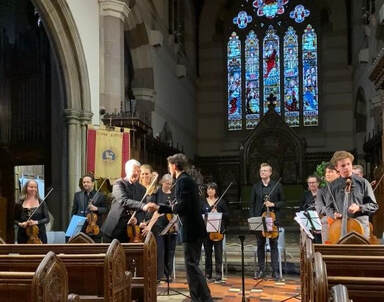
Nocturnal Scherzo: Premiere of a new arrangement for string orchestra
On 2nd July 2022 the New London Orchestra conducted by Joshua Ballance gave the premiere of a new arrangement for string orchestra of the Nocturnal Scherzo (originally written for string quartet), in the High Barnet Chamber Music Festival. The programme also included Britten's Serenade for Tenor, Horn and Strings, and Schoenberg's Verklaerte Nacht.
Scores of this arrangement are available using the contact form here

Two concerts in April 2022
Music for Piano Duet - on Saturday 2nd April 2022 in Twyford church near Winchester, pianists Jong-Gyung Park and Anthony Zerpa Falcon performed Airs of the Seasons, alongside Schubert's Fantasie in F Minor and Gershwin's Rhapsody in Blue.
Quartets for Palm Sunday - on Sunday 10th April 2022 in the Italianate church in Wilton near Salisbury, the Villiers Quartet gave the first complete concert performance of the Variations on Love Divine, with Haydn's Seven Last Words from the Cross.
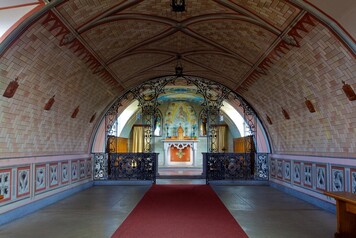
St Magnus International Festival
The beautiful Italian chapel in Orkney was the venue for a recording of Psalm 122, I was glad, from the Songs of Faith and Joy, sung by mezzo soprano Lotte Betts Dean with guitarist Michael Butten, as part of the Land, Sea and Sky series in the 2021 St Magnus International Festival.
Click here to listen
More song recordings
|
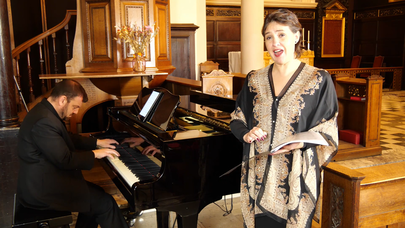
Two songs for soprano and piano have been recorded by Kate Semmens (who sang at Ailsa’s funeral) with pianist Steven Devine.
Cuckoo, come! is the conclusion of Alcuin’s poem ‘The Strife Between Winter and Spring’, from Helen Waddell’s translations of Medieval Latin Lyrics. The contest between the two seasons is focused on the song of the cuckoo as the harbinger of spring. At the outset of the poem, Winter does his worst to hold the cuckoo’s song at bay, but eventually Spring is pronounced the victor with this lovely pastoral lyric. Click here to listen. |
Song of the Mad Prince is an evocative setting of Walter de la Mare’s poem, apparently voiced by the deranged Hamlet after the death of Ophelia. It combines the curious whimsy of a nonsense song with the disturbed imagination of a grieving lover, dressed in luxuriant imagery that belies the underlying sense of loss. Click here to listen.
New song recordings
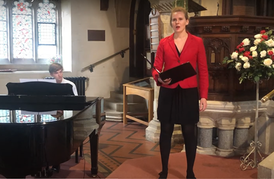
Soprano Lucinda Cox (who sang the premiere of The Spirit of Love at St George’s Bristol in February of this year) has made two new song recordings with pianist Tom Jesty.
Come Away Death, Feste’s melancholy lyric sung for the lovesick Orsino in Twelfth Night, is an early composition which Ailsa Dixon revisited around 1980, reworking the song with guitar accompaniment for a stage production. This recording returns to the original version with piano. Click here to listen.

I will lift up mine eyes unto the hills is a setting of Psalm 121 for high soprano. It was written in the mid-1980s for Sally Harrison, who had sung the part of an angel in the closing scene of Ailsa’s opera Letter to Philemon in 1984. The soaring vocal lines evoke the elevation of the hills and the exaltation of the faithful soul, over a flowing piano part. The accompanying video is a celebration of the beauty of hillside landscapes, following the words of the Psalm through light and shade, the sun by day and the moon by night, closing in a spectacular sunset ‘from this time forth, even for evermore’.
Click here to listen and be transported.
Anniversary recording from Fretwork
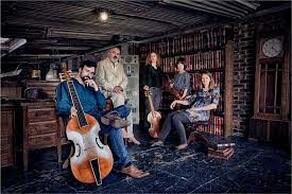
A new recording of the first of the Three Fugues on Biblical Subjects, played on viols, has been released to mark the third anniversary of Ailsa’s death in August 2017. Fretwork are known for their pioneering programmes, exploring the viol consort’s expressive potential far beyond its conventional early music niche; their latest project 'Albion' fuses ancient and modern in the soundscape of British music, making them ideal interpreters for a work that interweaves Renaissance polyphonic writing with twentieth-century harmonies.
Click here to listen to ‘Since by Man came Death’ in its beautiful new rendition on viols.
Lutes in lockdown: a new recording
Among the unperformed works discovered in Ailsa’s archive after she died was a set of Three Fugues on Biblical Subjects. The writing suggests a range of influences from Renaissance polyphony and the lute music of John Dowland, to Purcell’s viol fantasias (mentioned in a note accompanying the manuscripts) and the keyboard fugues of Bach. Each one takes a short Biblical text as its ‘subject’, responding to the rhythms of the opening words: ‘Since by man came death’, ‘And I will write my Law in their inmost parts’ and ‘By the waters of Babylon’.
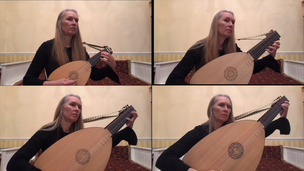
Ailsa was herself a lutenist, and one of the fugues was written out in lute tablature with the intention of presenting it to the Lute Society in memory of her teacher, the Society’s founder, Diana Poulton. Following their rediscovery, Lynda Sayce, who played at Ailsa’s funeral, has arranged the three fugues for her unique family of Renaissance lutes in different sizes. With concerts currently suspended during the coronavirus lockdown, the idea emerged for an original way to premiere the fugues, in a composite home recording, with Lynda playing all the parts. With the support of the Music Reprieval Trust, the recording was commissioned and presented to Ailsa’s husband Brian on his 89th birthday. Click here to listen.
'Something special': Reviews of 'The Spirit of Love' premiere at St George's Bristol
The British Music Society have published in their April newsletter a review of the concert at St George’s Bristol in February, featuring the premiere of The Spirit of Love, 3 songs for soprano and string quartet, and the first performance of the Nocturnal Scherzo for more than 25 years.
Reviewer Poppy Bingham writes of ‘foreboding and dissonant harmonies which smoothly morph into rich and sweet sounds… The Villiers Quartet played with exceptional sensitivity, executing this complex mixture of emotions and drawing out Ailsa Dixon’s personal voice with a brilliant balance of subtlety and drama.’ Paying tribute to Lucinda Cox’s ‘outstanding’ performance of the songs, ‘clear and soaring’, the review concludes ‘At the end of the concert there was a feeling that something special had just occurred.’
The concert was also reviewed by Laura Hillier for Bristol Women's Voice. She writes that Nocturnal Scherzo and The Spirit of Love were ‘intricate and complex… performed with passion and emotion permeating every single note. The members of the quartet artfully bounced off one another [in] a delightfully animated, yet wordless, conversation. Lucinda Cox’s voice was strikingly beautiful and clear, carrying a melancholy, haunting tone to the pieces. I felt that the overall experience of listening to Ailsa’s pieces was dream-like in its storytelling… utterly enchanting.'
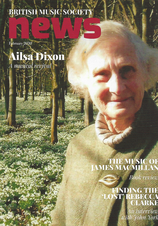
Cover story in The British Music Society's magazine
The revival of Ailsa's music was the chosen as the cover story in the February issue of the British Music Society's quarterly magazine. Originally published in their newsletter last October, the article gives an overview of her musical life and works with insights into her composition, and refers to the increasing number of recent and forthcoming performances as ‘welcome signs of a musical revival for one of the many female composers missing from the history of British music in the twentieth century.’

The Villiers Quartet to premiere 'The Spirit of Love' at St George's Bristol
On February 20th 2020, in the lunchtime concert series at St George’s Bristol, the Villiers String Quartet and soprano Lucinda Cox will give the world premiere of Ailsa’s three songs for soprano and quartet, The Spirit of Love, together with the first performance of the Nocturnal Scherzo for over 25 years. Also on the programme will be the string quartet in E Minor by Ethel Smyth. Written in 1902, Smyth’s quartet likewise had to wait for its first performance, some 12 years later, during which time she revised the score substantially; it has been described as ‘a spellbinding work that deserves a higher profile’.
This concert has been enabled by grants awarded by the Gemma Classical Music Trust, which supports wider recognition of musicians (including composers) whose profile is still emerging, and the Music Reprieval Trust, which sponsors performances of lesser-known repertoire.
On February 20th 2020, in the lunchtime concert series at St George’s Bristol, the Villiers String Quartet and soprano Lucinda Cox will give the world premiere of Ailsa’s three songs for soprano and quartet, The Spirit of Love, together with the first performance of the Nocturnal Scherzo for over 25 years. Also on the programme will be the string quartet in E Minor by Ethel Smyth. Written in 1902, Smyth’s quartet likewise had to wait for its first performance, some 12 years later, during which time she revised the score substantially; it has been described as ‘a spellbinding work that deserves a higher profile’.
This concert has been enabled by grants awarded by the Gemma Classical Music Trust, which supports wider recognition of musicians (including composers) whose profile is still emerging, and the Music Reprieval Trust, which sponsors performances of lesser-known repertoire.

The British Music Society
The British Music Society has published several features on Ailsa's music.
The first article, in October 2019, documents the revival of her music, with an overview of her compositions. It can be read here (the article is about a third of the way through the newsletter).
The second article, in December 2019, featured the upcoming world premiere of The Spirit of Love, 3 songs for soprano and string quartet, and can be read here.
The third, in January 2020, announced to the British Music Society's membership the twice-yearly newsletter of the Friends of Ailsa Dixon, featuring news of recent and forthcoming concerts, broadcasts, progress on the availability of scores, and recording plans. You can sign up for the newsletter using the Contact form here.
The British Music Society has published several features on Ailsa's music.
The first article, in October 2019, documents the revival of her music, with an overview of her compositions. It can be read here (the article is about a third of the way through the newsletter).
The second article, in December 2019, featured the upcoming world premiere of The Spirit of Love, 3 songs for soprano and string quartet, and can be read here.
The third, in January 2020, announced to the British Music Society's membership the twice-yearly newsletter of the Friends of Ailsa Dixon, featuring news of recent and forthcoming concerts, broadcasts, progress on the availability of scores, and recording plans. You can sign up for the newsletter using the Contact form here.
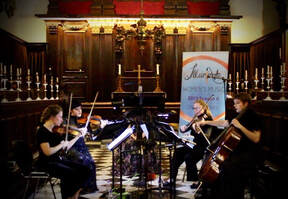
Illuminate Women's Music concert in Oxford
On November 8th 2019, as part of its celebration of 40 years since women were admitted, University College Oxford hosted a performance in the Illuminate Women’s Music touring concert series, directed by composer Angela Elizabeth Slater. The Illuminate String Quartet included in their programme an Advent Sequence comprising the first five movements of Ailsa's Variations on Love Divine.
Click here to read an article on Ailsa's music for string quartet, published on the website of Illuminate Women's Music in connection with the concert.
On November 8th 2019, as part of its celebration of 40 years since women were admitted, University College Oxford hosted a performance in the Illuminate Women’s Music touring concert series, directed by composer Angela Elizabeth Slater. The Illuminate String Quartet included in their programme an Advent Sequence comprising the first five movements of Ailsa's Variations on Love Divine.
Click here to read an article on Ailsa's music for string quartet, published on the website of Illuminate Women's Music in connection with the concert.
Friends' inaugural newsletter
February 2019 saw the first newsletter of the Friends of Ailsa Dixon, designed to bring together all those who have taken an interest in the revival of her music. Please use the Contact page to get in touch if you would like to be added to the mailing list for future newsletters, including updates on forthcoming concert dates and plans for recordings of her works.
The second newsletter was issued in December 2019
February 2019 saw the first newsletter of the Friends of Ailsa Dixon, designed to bring together all those who have taken an interest in the revival of her music. Please use the Contact page to get in touch if you would like to be added to the mailing list for future newsletters, including updates on forthcoming concert dates and plans for recordings of her works.
The second newsletter was issued in December 2019
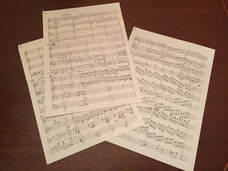
Digitising the scores
Ailsa's scores, until now preserved only in manuscript, are now being digitised as part of a project in Finland to rescue the works of neglected female composers. The Savo Musical Society specialises in the performance of music by women composers including Ida Moberg (a pupil of Sibelius), Lili Boulanger and Florence Price; their editorial project to produce digital editions from manuscript scores will serve to make these works newly accessible to musicians worldwide.
Ailsa's scores, until now preserved only in manuscript, are now being digitised as part of a project in Finland to rescue the works of neglected female composers. The Savo Musical Society specialises in the performance of music by women composers including Ida Moberg (a pupil of Sibelius), Lili Boulanger and Florence Price; their editorial project to produce digital editions from manuscript scores will serve to make these works newly accessible to musicians worldwide.
Interviews and Features
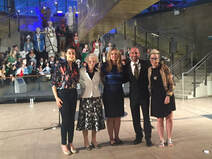
In December 2018 Bristol Women's Voice published a pair of interviews with Ailsa's daughter, the first charting Ailsa's musical development and career, and the second reflecting on the larger context of women composers' under-representation in classical music-making, and how the barriers are now being overcome.
In 2019, the March/April issue of Choir and Organ includes a feature article on the London Oriana Choir's Five15 project in which 'These things shall be' was premiered. Conductor Dominic Ellis Peckham reflects ‘That experience of enabling Ailsa to hear her piece for the first time at the very end of her life made us realise how important this project is [in] giving recognition to the many female composers over the centuries whose music has been neglected.’
In December 2018 Bristol Women's Voice published a pair of interviews with Ailsa's daughter, the first charting Ailsa's musical development and career, and the second reflecting on the larger context of women composers' under-representation in classical music-making, and how the barriers are now being overcome.
In 2019, the March/April issue of Choir and Organ includes a feature article on the London Oriana Choir's Five15 project in which 'These things shall be' was premiered. Conductor Dominic Ellis Peckham reflects ‘That experience of enabling Ailsa to hear her piece for the first time at the very end of her life made us realise how important this project is [in] giving recognition to the many female composers over the centuries whose music has been neglected.’
Review of 'Airs of the Seasons' premiere
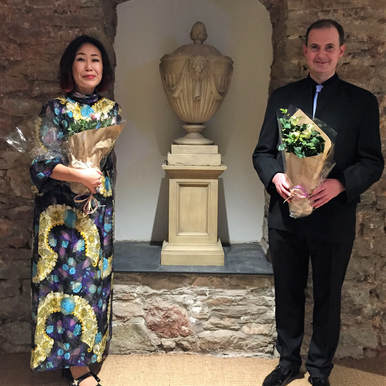
Frances Wilson, author of classical music websites The Cross-Eyed Pianist and Meet the Artist, reviewed the premiere of Ailsa's sonata for piano duet by Piano4Hands (Joseph Tong and Waka Hasegawa):
'The opening chords of the first movement are reminiscent of Debussy and Britten in their timbres, and the entire work has a distinctly impressionistic flavour. Ailsa's admiration of Faure is also evident in her harmonic language, while the idioms of English folksong and hymns, and melodic motifs redolent of John Ireland and the English Romantics remind us that this is most definitely a work by a British composer with an original musical vision. The entire work, although quite short, is really delightful and inventive. Rich in imagination, moods and expression, the musical evocation of each season is distinct and characterful. From a pianistic point of view, the textures of the music are carefully conceived to bring a range of colours and voicings imaginatively shared between the two players.'
Frances Wilson, author of classical music websites The Cross-Eyed Pianist and Meet the Artist, reviewed the premiere of Ailsa's sonata for piano duet by Piano4Hands (Joseph Tong and Waka Hasegawa):
'The opening chords of the first movement are reminiscent of Debussy and Britten in their timbres, and the entire work has a distinctly impressionistic flavour. Ailsa's admiration of Faure is also evident in her harmonic language, while the idioms of English folksong and hymns, and melodic motifs redolent of John Ireland and the English Romantics remind us that this is most definitely a work by a British composer with an original musical vision. The entire work, although quite short, is really delightful and inventive. Rich in imagination, moods and expression, the musical evocation of each season is distinct and characterful. From a pianistic point of view, the textures of the music are carefully conceived to bring a range of colours and voicings imaginatively shared between the two players.'

|
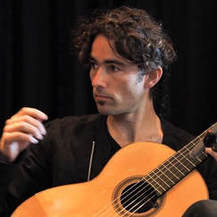
Songs of Faith and Joy Emily Gray (mezzo soprano) and Gerard Cousins (guitar) performed some of the Songs of Faith and Joy in their recital in Cantref church on the fringe of the Brecon Baroque festival on 21st October 2018, and again in a concert for St Cecilia's Day in Hampstead on 22nd November 2018. They will perform the complete cycle in Winchester on 27 April, 2019. |
|

Variations on Love Divine
Ailsa's 19 Variations on Love Divine for string quartet featured in a recent article on the use of hymn tunes in instrumental music (from Bach to Britten and beyond), on the classical music website Corymbus. Simon Brackenborough writes: 'There is something quietly thought-provoking about Dixon’s insistence on using this modest, contented-sounding tune to cover such large theological ground... the message of this work seems to be that a whole world of religious meaning can be revealed through even the smallest means. '
Click here to read the article in full
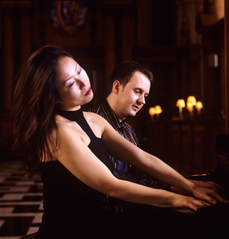 Photo: Hanya Chlala/ArenaPAL
'Airs of the Seasons' premiere at St George's Bristol
Ailsa's sonata for piano duet (4 hands), Airs of the Seasons will be premiered in the lunchtime concert series at St George's Bristol on 8th November 2018, by Joseph Tong and Waka Hasegawa.
Joseph Tong writes of the music: 'It is a beautiful set of pieces. Each of the movements evokes aspects of the seasons in an original and
imaginative way - the musical language itself and the way in which Ailsa creates four-handed piano textures are absorbing and distinctive'
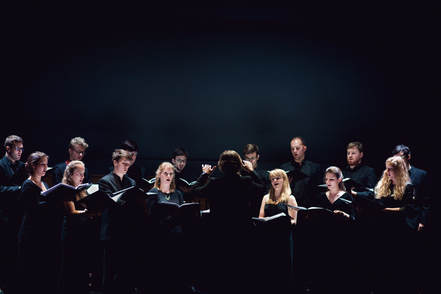 Photo: Theo Williams
Sansara perform 'These things shall be'
Ailsa's anthem, These things shall be was sung by Sansara at the Little Missenden Festival on 12th October 2018, and again on 20th October at Romsey Abbey, as part of the St Ethelflaeda Festival.
Several of Ailsa's works were premiered at the Little Missenden Festival in the 1980s, including songs and duets performed by Ian Partridge and Lynne Dawson, Nocturnal Scherzo by the Brindisi Quartet, and Shining Cold by Sally Harrison, Cynthia Millar and members of the Brindisi Quartet.
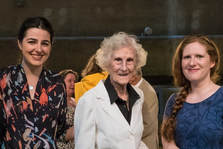
Feature article on the re-discovery of Ailsa's music
Click here to read a feature by Robert Hugill on the revival of interest in Ailsa's work following last year's premiere at the Cutty Sark, charting her development as a composer,

Music on YouTube
A YouTube channel has now been launched to bring together the existing recordings of Ailsa's music and make these available to new audiences.
Sohrab and Rustum and Variations on Love Divine can be played on the Ailsa Dixon channel, or via this site (see Links).
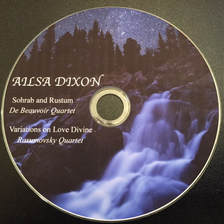
String quartet recordings
Two of Ailsa's pieces for string quartet were recorded in the early 1990s: Sohrab and Rustum by the De Beauvoir Quartet, and Variations on Love Divine by the Rasumovsky Quartet. These original performances have been digitised and are now available on a CD for non-commercial purposes, to bring these works to light again and encourage future performances.
Please get in touch via the Contact page if you would like a copy
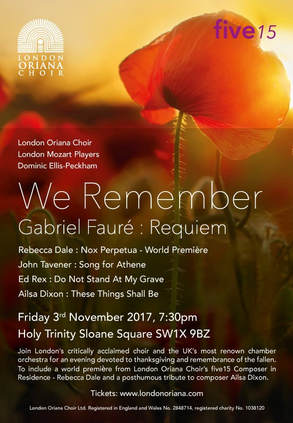
Two concerts of remembrance, 3 and 11 November 2017
A tribute to Ailsa's life and music, with a performance of her anthem 'These Things Shall Be', was given as part of a concert of remembrance by the London Oriana Choir at Holy Trinity Church, Sloane Square on 3rd November.
The concert was repeated in Bristol (where Ailsa was born) on 11th November.
The London Oriana Choir gave the premiere of 'These Things Shall Be' in July 2017, five weeks before Ailsa died.
Click here to read an interview with Ailsa in the 'Meet the Artist' series

London premiere, July 2017
Ailsa’s anthem for choir, ‘These things shall be’ was premiered by the London Oriana Choir at the Cutty Sark on 5 July 2017, as part of the Five15 project, giving a voice to women composers across the UK.
The glass-roofed hall surrounding the ship's keel made a spectacular setting for the second of Five15's concerts featuring the work of women composers.
Click here to watch the video: vimeo.com/229386773
Ailsa’s anthem for choir, ‘These things shall be’ was premiered by the London Oriana Choir at the Cutty Sark on 5 July 2017, as part of the Five15 project, giving a voice to women composers across the UK.
The glass-roofed hall surrounding the ship's keel made a spectacular setting for the second of Five15's concerts featuring the work of women composers.
Click here to watch the video: vimeo.com/229386773
Images courtesy of the London Oriana Choir / Kathleen Holman
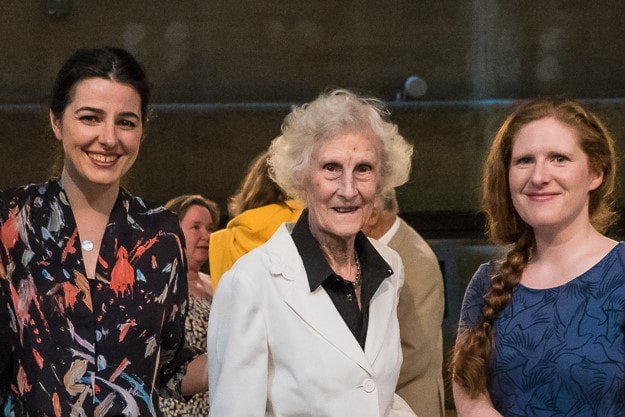
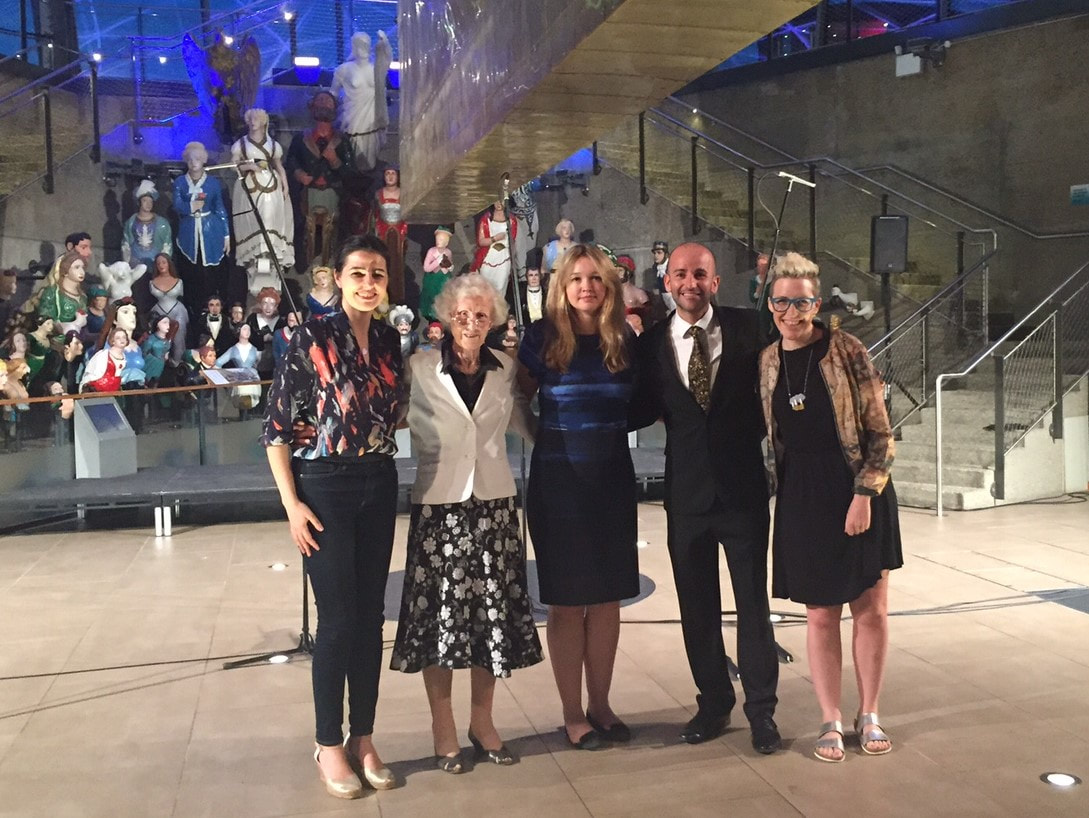
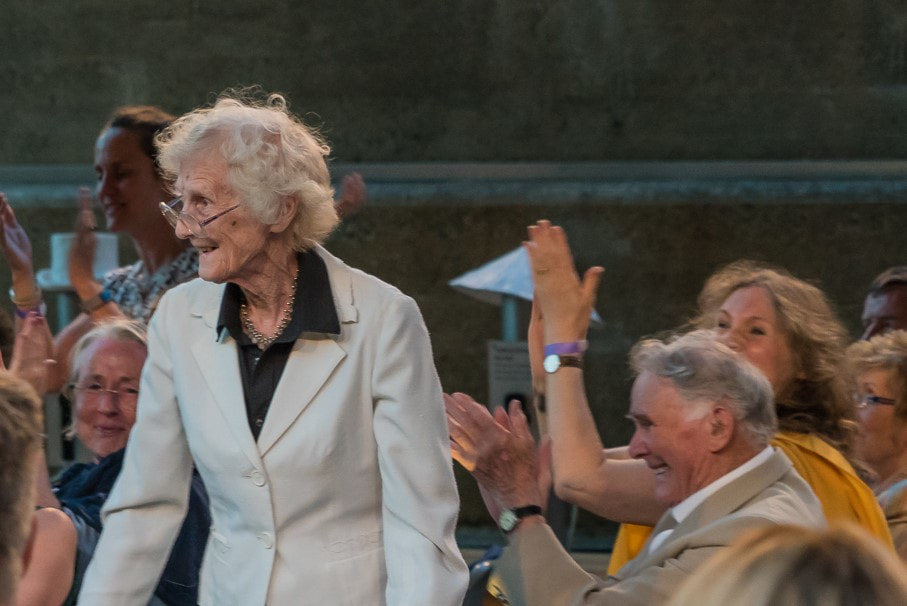
|
Ailsa (centre) with Dobrinka Tabakova and Cheryl Frances Hoad
|
Composers line-up with conductor Dominic Ellis-Peckham
|
Ailsa takes a bow
|
